Tuesday, August 26, 2025

Discovery Writers: Build Your Novel: Step 4, Crucial First Chapters (most important and also voted most likely to be rewritten)


FROM BUILDING YOUR NOVEL

Step 4: Starting Construction - The Crucial First Chapters (Tips for Discovery Writers)

Yes, the first chapters are probably the most important chapters of your novel, BUT they’re also the most likely to be rewritten—so there’s that.

The first chapters of your novel are both the most important and the most likely to be deeply rewritten later in revision. Most important because, especially in the time we live in, if you don’t get the reader very quickly, if you don’t pull them in and keep them turning pages, they will put your book down faster than a hot plate.

So, keep this in mind. You need to pull the reader into your story in the first chapters. How can you do that if you don’t know what your story is? Good question. Just get something down in draft one and realize you’ll come back to it. IMPORTANT: Do come back to it in revision once you know your story and, hopefully, the end of your story.

And here’s something else to keep in mind. INCITING INCIDENT. On a practical note: get to it as fast as possible. More on that in a bit.

First chapters are tricky. They need to hook readers, establish voice, introduce characters, hint at conflicts, and set expectations for the entire book. Oh, and they need to do all this while being compelling enough that someone keeps reading. But again, it doesn’t need to happen in the first draft. You can figure it out when you revise.

The first chapter you initially write might not even end up being your first chapter. But you do need to start somewhere, and starting strong will build your confidence and momentum. Also, it will help you find your way forward to an important early moment, the inciting incident in your story that propels the story forward.

So how do you begin when you’re a discovery writer who doesn’t know where the story is ultimately headed?

Start with action or disruption. I mean, start at a point where something is changing for your main character. The day that’s different. The moment their ordinary world cracks. Make the place you start important in some way, even if it’s not an earth-shattering way.

What you’re doing is creating narrative momentum. You’re making a promise to the reader: “Keep reading. I’m leading you to something interesting.” You’re also making that same promise to yourself. It will help you keep writing.

When introducing characters, resist the urge to tell us everything about them at once. We don’t need their full backstory in Chapter One. Show us who they are through their actions, thoughts, and dialogue in that opening situation. Let us discover them the same way you’re discovering them—gradually, through what they do and don’t do, say and don’t say. You are a discovery writer. Share your discovery with your readers.

One technique I love is starting with a character wanting something—even something small. A character in pursuit of a goal, even a mundane one, immediately creates questions in the reader’s mind. Will they get it? What stands in their way? Why does it matter to them? This helps the reader begin to care for the character and root for them, AND it creates story. I say even a mundane goal will work, but not for the entire novel. You need important goals as you move forward and for the heart of your novel.

Setting the tone happens naturally if you’re true to your voice and foundation. Is this a tense thriller? A contemplative literary novel? A whimsical fantasy? Your word choices, sentence structure, and what you choose to focus on will establish this. Trust your instincts here.

How Do You Start With Purpose While Leaving Room To Discover Story?

Now, the big question for discovery writers: how do you start with purpose while still leaving room to discover the story? The trick is to focus on immediate scenes rather than the big picture. Don’t worry about setting up plot points that will pay off 200 pages later (you can reverse engineer this later). Focus on making the current scene compelling on its own terms. You write a novel one page, one chapter at a time. The more you write, the more confident you’ll become in your choices.

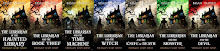
Now, you do have a way to push action forward early in your novel. You make something happen to your character or your character does something that is compelling and that pushes the story forward. This is called an inciting incident. It’s what propels the story forward. In my novel, The Librarian of the Haunted Library, my protagonist leaves home and goes to New Orleans and is nearly killed but escapes and moves on. All that happens but the actual inciting incident is when he gets lost in a haunted forest and finds his way to Eden where he becomes the librarian of this magical town. (This is all done with a comic eye for exaggeration as my story is a combination of comic fantasy and horror comedy). That’s where the story really moves forward into what the whole novel will be about. You need one of these!

But as I wrote before, always remember that you’ll have a chance to revise.

Ask yourself: What’s interesting about this moment? What’s at stake for my character right now? What question does this scene raise that will make readers want to know more? This is how you build a chapter. You keep asking yourself questions that will help you develop story and character.

Common First Chapter Mistakes

Starting too early: Beginning with ordinary life before anything interesting happens for too many pages. Unless showing that ordinary life is crucial for contrast, skip ahead to something happening and get to the inciting incident as soon as you can.

Avoid Info dumping: front-loading all the world-building, character backstory, and context before the story starts moving. Resist this! Weave necessary information into active scenes instead. Don’t try to stuff your first chapters with information. You’ll bore the reader.

Really think about this: Your goal is to keep the reader turning the page. Sometimes you’ll realize you’re writing something that isn’t working or is boring or is trying to force too much information into the chapter. You’ll be telling instead of showing, but you’ll convince yourself it’s okay because it will lead the reader to some cool stuff in 50 pages.

The reader will never get to page 50. You have to focus on making every scene move the story forward or move our understanding of the character forward. Focus on developing story and, depending on what genre you write in, character first and then setting.

Opening with a dream or a character waking up is almost always a bad idea. Beware of this kind of cliché beginning (of course, you can break any “rule” like this if you do it in some interesting new way but…mostly that doesn’t happen).

If you’re stuck on how to begin, you might try one of these practical approaches:

Write three different openings for your novel, starting at different points in the story. See which one feels most energetic and intriguing.

Start in the middle of a conversation or action, then fill in context as you go.

Open with a question, statement, or observation in your character’s voice that reveals something essential about them. Then move on to something happening that relates to the observation. Then revise immediately so it is in narrative form.

Remember, your first draft’s opening chapters are not set in stone. Many discovery writers find their true beginning after writing the entire first draft. You might realize your story actually starts in what you originally wrote as chapter three. That’s fine. That’s part of the process.

What matters now is getting words on the page with enough energy and direction that you want to keep going. Your first chapters should be exciting for you to write. If you’re bored writing them, readers will be bored reading them. Let me just write that again: If you’re bored with your writing, readers will be bored.

Trust your instincts. If a particular opening feels alive to you—if it raises questions you’re genuinely curious to explore—chances are it will do the same for readers.

Now go write those first chapters. They can be messy and imperfect. What they can’t be is boring. As you’re writing those first chapters and getting excited about your story, you’ll likely have all kinds of ideas about where your story can go. Be bold. Push forward.

Tuesday, August 19, 2025

Building Your Novel, Step 3: The Foundation (Especially for Discovery Writers Like Me)

 Building Your Novel, Step 3: The Foundation (Tips for Discovery Writers)

Learn how to build a solid foundation for your novel as a discovery writer. Explore character-based, situation-based, and setting-based foundations with practical exercises.

You’ve got your ideas. You’ve collected your materials. Now, you need to figure out what your novel is actually about. At least, that's what the novel rests on. The foundation, to keep playing out the metaphor.

Every building needs a foundation. So does your novel. This doesn’t mean plotting out the entire story. It means identifying the core elements that everything else will build upon. For discovery writers, this is crucial. Without at least knowing what you’re building on, you might end up with a pile of scenes instead of a novel. (Just as a side note, eventually in revision, you’ll want each scene to move the story forward. A sense of progression is essential. But more on that later.)

Your foundation will be a combination of character, plot and setting and their interaction in your story. Often it will start with your character in a situation that is set in a specific place (fantastic, realistic, horrific etc.) and expand from there.

Let’s break it down:

Character-Based Foundation: 

Maybe you can’t stop thinking about a particular character. You hear their voice in your head. You know how they’d react in different situations. Their personality feels real to you.

This was the case with the first novel in my Strangely Scary Funny series, The Librarian of the Haunted Library. I knew I had this young man, who had special magical abilities and had grown up in foster care and wanted to escape the small town he was in. I knew that he would go to New Orleans first, but that was just the beginning of his journey. Did I know what the journey was? Big fat NO. I was surprised where the novel went after that, but it began with this idea of my protagonist being a potential hero on a journey.

If your foundation is character, spend time understanding who they are. Not their favorite color or what they eat for breakfast—unless those details reveal something essential. Understand what they want. What they fear. What they believe about themselves that is and isn’t true. What wound from their past still shapes their decisions. Go after their core beliefs and disbeliefs.

You don’t need to write this all down in some character bible. Just think about it. Daydream about them. Let them become real to you as you write. AS YOU WRITE. You’re a discovery writer. Discover.

Situation-Based Foundation:

Sometimes what grabs you isn’t a character but a situation—a problem, a mystery, a conflict that demands resolution.

“What if a man woke up as a giant insect?” That situation was all Kafka needed to write “The Metamorphosis.” From this foundation, he built the kind of character this might happen to and the theme of his story. A character in a situation. This is something I almost always get to as I’m constructing my novel.

“What if dinosaurs were brought back to life in the modern world?” That question was the foundation of Jurassic Park. It needed the right cast of characters to make it interesting and compelling. It needed the right story to keep the suspense moving things forward. That will come as you build the novel.

If your foundation is a situation, spend time exploring the implications. Who would be most affected by this situation? Why does it matter? What are the stakes? What complications might arise?

Setting-Based Foundation

Sometimes the foundation is a place—real or imagined—that feels alive with story potential. A small town in the South with good and bad people in it but with mostly average people, part good and part bad, stuck in their prejudices. A white woman accuses a Black man of raping her. TO KILL A MOCKINGBIRD.

Middle-earth was Tolkien’s foundation. The haunted Overlook Hotel was King’s foundation for The Shining. Possibly their stories focused on those settings to get their stories moving. At the very least, you can see that a great deal of the story happens because of the unique and powerful settings.

If your foundation is setting, explore that world. What are its rules? Its history? Its secrets? What kind of people inhabit it? What conflicts naturally arise there?

Let’s say you want to write a novel about a city where memories can be extracted, bottled, and consumed by others. That’s an interesting setting. Now you start deciding other things. Do you want this to be a fantasy or Scifi novel? Do you want it to be comic in tone or dramatic? What kind of character do you want to move the novel in this world? What tension can you establish early on? There are so many ways to go from this simple beginning.

Here’s the thing about foundations: they need to be solid, but they don’t need to be complete. You don’t need to know everything about your character, situation, or setting before you start. You just need to know enough that it feels real and generative to you. In other words, you can build on it!

How do you know when your foundation is strong enough? When it starts generating questions you’re eager to explore. When it suggests conflicts and complications. When it feels like it contains multitudes.

For discovery writers, the trick is finding the balance between having enough foundation to build on and remaining open to discovery. Develop your core element just enough that it can support a story, then start writing to see what emerges.

Some practical approaches:

For character foundations: Write a scene showing your character in a moment of conflict, even if that scene never appears in your novel. See how they react under pressure.

For situation foundations, write out the ripple effects of your central situation. Who benefits? Who suffers? What unexpected consequences might emerge?

For setting foundations: Write a brief history of your setting, or describe how different types of people experience it differently.

None of these exercises should take more than an hour. They’re not about planning your novel; they’re about making your foundation solid enough to support the weight of a story.

Remember, you’re not trying to figure out the whole novel at this stage. You’re just making sure the ground under your feet is stable before you start building walls.

Many new writers make the mistake of trying to develop everything equally from the start—character, plot, setting, theme. That’s overwhelming and unnecessary. Focus on your foundation first. Let the rest emerge as you write. Also, be open to changing everything. That’s part of writing a discovery draft. Don’t forget this aspect. Nothing is written in stone unless you happen to write in stone. Which would be weird and cumbersome. Not advisable.

The beauty of this approach is that it plays to the strengths of discovery writers. We’re good at following threads, making connections, finding patterns as we go. But we need the solid start to ground us.

So, develop your foundation just enough. Then start building and see what happens.

My Amazon page: https://www.amazon.com/stores/Brian-Yansky/author/B001H6UHHW?ref

I’ve published over twenty novels as an independent writer and had five novels traditionally published. My Strangely Scary Funny series is my most popular. It has twelve novels. I’ve earned over six figures with that series so far. I’ve never written any of these novels using a detailed outline. If you’re struggling because you think you have to be able to write an outline to write a novel, I’m here to tell you, brothers and sisters, you do not.

In the first novel in my series, I wrote thinking that I was just going to write whatever I felt like and not worry about where it went in my first draft. I wrote it fast. I tried not to think too much. I tried to let my subconscious and intuition push it forward. Even after I’d rewritten it a few times, I wasn’t sure what it was (humorous, yes, but horror, fantasy, urban fantasy, supernatural? It seemed to have a lot of genres in it), but I thought it was pretty good whatever it was. The first two reviews were terrible, and I thought, well crap. But then people started writing reviews about how much they loved the weird and unique writing and story. So then I thought, well okay, maybe I do have something here. It now has over 3000 reviews and well over a thousand five- star reviews. The second novel in the series has over 1000 reviews. I’m still not sure what it is, but whatever it is, it’s uniquely mine.

Write what you love to write. Trust your instincts in the first draft. Revise. Be more critical in revision, but be careful not to kill what makes your writing uniquely yours. Then rewrite again. Then, hope for the best and get started on your next novel as soon as you can.

Good luck!

Monday, August 11, 2025

FOR DISCOVERY WRITERS: Building Your Novel: STEP 2, The Best Tips for Gathering Ideas and Inspiration When You're Not An Outliner

 Building Your Novel: STEP 2, The Best Tips for Gathering Ideas and Inspiration

How to gather ideas for a novel

So you’ve decided to take the leap. Good for you. Now, what are you going to write about?

Ideas are everywhere. That’s both the good news and the bad news. The trick isn’t finding ideas—it’s recognizing which ones you can build into a novel. A lot of that depends on you.

Let me be clear: you don’t need the perfect idea to start writing. What you need is something that excites you. Something that you can develop into a long story from, likely, several stories. Main plot, subplots, plots within plots.

For discovery writers, the best ideas aren’t fully formed plots. They’re questions. Provocations. “What if” scenarios. What if the chosen antichrist doesn’t want to be the antichrist? Begin with the actual words “What if” and try to complete the sentence.

Inspiration tips For Discovery Writers

If you’re struggling with getting started, you might try making a list of What ifs. Brainstorming like this usually works best if you make your list quickly without thinking about it too much. Come up with ten or twenty or thirty what-if scenarios. Think of people or places or themes. Or maybe you just come up with three or four, and that’s all you can get. Fine. You just need one.

Sometimes going for a walk or taking a shower or bath is a good place to get ideas.  Let your subconscious work. It works for me anyway. Baths especially, for some reason. I don’t advise idea hunting while you’re driving or operating other large machinery.

How do you know if an idea has novel potential? For me, it’s when it starts growing on its own. I’ll jot down something simple. A sixty-year-old man finds out he was adopted. If your mind keeps returning to an idea, expanding it, explaining it, and certain plot points come to you, then you know you’re on to something. A sixty-year-old man finds out he was adopted when his parents both die. A sixty-year-old man finds out he was adopted when his parents both die while he is going through his second divorce. I start to see a plot. He keeps failing in relationships. He links this to his being adopted. Yes, he’s a bit old for a midlife crisis, but everyone keeps telling him sixty is the new forty. Did he miss his midlife crisis? Would it be all right for him to have it now? Etc., etc., I just keep playing with the idea.

Don’t overthink this stage. Collecting ideas should be playful, not analytical. The critical brain is useful later, but right now, it’s the creative brain you want to use.

Here are some ways I gather materials without suffocating them with structure:

Snapshots: Quick descriptions of scenes I can vividly imagine, even if I don’t know where they fit in a larger story.

Character sketches: Not detailed biographies, just impressions. “A man who can’t remember people’s names suddenly remembers everyone’s name.” “A librarian who works in a haunted library.”

Setting fragments: Places that feel charged with story potential. An abandoned amusement park where the rides still move at night and seems populated by people even though the town has only a few hundred residents. Where did these people come from? What is going on in the park?

Tensions: Basic conflicts that intrigue me. Two brothers who haven’t spoken in twenty years are forced to run their father’s business together.

Notice, none of these are plots. They’re seeds, not blueprints. Seeds are fine. You’re going to learn how to grow these plots as you discover each new aspect of your story. What matters is capturing ideas in their raw state, before your inner critic can tear them apart.

When an idea really grabs you—when it won’t let you go—that’s when you know you’ve found something worth exploring. It doesn’t need to be original. It needs to be yours. It needs to be something you care enough about to spend months wrestling with.

I’ve started novels with nothing more than a character’s voice in my head. One book began because I couldn’t stop thinking about a particular beach town in winter. Another grew from a single line of dialogue I overheard at a coffee shop.

If you’re struggling to find that spark, here’s another exercise to try: Write down ten things that make you angry. Ten things that break your heart. Ten things you don’t understand but wish you did. Maybe you’ll find seeds for a novel in this way.

Remember: at this stage, quantity beats quality. Collect widely, indiscriminately. The sorting happens later.

And here’s a truth that might free you: you don’t need to have THE idea before you start. Many discovery writers begin with a vague notion and discover their real story through the act of writing. The first idea is just a way into the journey of writing a novel.

Keep your idea collection somewhere you can access easily. Review it regularly. Let ideas cross-pollinate. Sometimes the magic happens when two unrelated concepts collide. This often happens to me. I have an idea and a second idea that doesn’t seem to go with the first works into the story. I work on figuring out ways they might work together in the same story. It’s fun. It’s challenging. Sometimes the friction of the ideas can create sparks. Sparks are usually good.

The materials you gather now don’t need to make a coherent whole. They’re just possibilities. Potential. They’re the pile of lumber, bricks, and tools in the yard before construction begins.

Your job isn’t to see the finished house yet. You can’t. Your job is to collect interesting building materials and trust that, when the time comes, you’ll figure out how they fit together.

Next time doubt creeps in, remember that every great novel started as a fragile idea in someone’s mind. Every masterpiece began as a messy collection of possibilities.

Gather your materials. Be generous with yourself. Get ready to build.

My amazon page: https://www.amazon.com/stores/Brian-Yansky/author/B001H6UHHW?ref

Tuesday, August 5, 2025

12 Steps to Write a Novel Without an Outline: A Guide for Discovery Writers


Discover how to write a novel without an outline using this 12-step guide for discovery writers. Gain courage, beat fear, and write that novel you've been wanting to write for years.


I'm going to expand on the two posts on building a novel I recently wrote by going deeper into the various points of those posts. There will be twelve new posts, one every week, for the next twelve weeks showing you how to build a novel from beginning to end. Hope it helps. Brian


12 Steps to Write a Novel Without an Outline: A Guide for Discovery Writers


Here's the truth: you don't need an outline to write a novel. What you need is courage and determination. The process you use to find your way isn’t all that important. Outline, don’t outline. Find what works for you and do that.

However, I’m here for the discovery writers because that’s my process. I’m going to try to tell you how to build a novel. Hope it helps.

My dad was a builder of homes. He had a regular job working for the post-office but his passion was building houses. While working full-time at the post-office, he’d build two or three houses a year. 

I can remember him taking me to lots he’d bought and telling me what kind of house was going to be built there. Empty lot one day. Foundation poured the next. Then weeks and months passed and the frame, the walls, the roof. Then the inside of the house: plumbing, appliances, electricity, paint and so on.  Eventually, a house to be lived in.

“If you build it they will come” is an oft-used quote from the movie Field of Dreams. Sadly, that’s not always the case, but if you build it you have a chance that they will come. If you don’t, you just have an empty lot.


Building a Novel:

Step 1: Breaking Ground - The Leap of Faith

So you can’t outline. Welcome to the club. I’ve been writing novels for years, and I’ve never been able to outline worth a damn. Every time I try, my creativity shrivels up like a raisin in the sun. That’s okay. There are plenty of successful novelists who don’t outline. Steven King, Toni Morrison, Ray Bradbury, Neil Gaiman, Elizabeth Strout, Donna Tartt, George Saunders, Terry Pratchett, Douglas Adams—to name just a few.

WHY FEAR IS NORMAL FOR WRITERS

Starting a novel without an outline is terrifying. It’s like jumping off a cliff and trying to build wings on the way down. I get it. The blank page stares at you accusingly. Your mind rebels at the idea, and fear sets in. How can I possibly do this? Where do I even start? If I do get started, where do I go after the start? I’ve written a few pages, but I need hundreds. How can I know what comes next and next and next? It’s impossible. Hundreds of pages? It’s impossible.

Breathe. This fear is normal. Every novelist—even the famous ones—feels this fear. The difference between writers and wannabe writers isn’t talent or outlines. It’s that writers write despite the fear. They put one word after another and another and they keep going.

If you’re waiting for certainty before you begin, you’ll never write a word. Novel writing is an act of faith. You have to trust that your subconscious mind knows things your conscious mind doesn’t. You have to believe that if you keep showing up to the page, the story will reveal itself to you.

“But what if I waste months writing and it turns out terrible?” you ask.

Here’s a secret: your first draft WILL suck. Mine always do. Almost everyone’s do. First drafts aren’t about perfection—they’re about discovery. They’re about finding out what your story is. The “discovery” in discovery writing is essential. So, cut yourself some slack on your first draft. Low expectations. Start there. Know that you can improve whatever you write with revision.

The perfectionist in you is your biggest enemy. That voice that says, “This isn’t good enough” You’ve got to try to silence it. That aspect of you doesn’t get a vote right now. Its turn comes in revision.

HOW TO START YOUR NOVEL

Start with anything. A character who fascinates you. A situation that raises questions. A setting that gives you chills. A scene that you see in your mind. That’s enough. That’s your foundation.

I’ve started all my novels with only vague notions. Sometimes I began with an image, like a man out in the woods who sees something he shouldn’t or a sheriff who wakes up in his bed but can’t remember getting there. Sometimes it was an idea. I wanted to write about a boy who had never had a home or family and who found both by leaving his town and going on a voyage of self-discovery. Or an alien invasion that takes only thirty seconds because we are so primitive compared to our invaders. Sometimes it’s a theme. Like the struggle to have relationships in our complicated world.

Start with a scene that thrills you. Do your best to express what thrills you, and you’re on your way.

Don’t worry about writing in order. If you know a scene that happens somewhere in the middle, write it. If you have a flash of dialogue but don’t know where it fits, write it down anyway. These are the bricks you’ll use to build your novel.

The goal isn’t to write a perfect novel in one go. The goal is to get words on the page that you can shape later. Remember this: you can’t revise a blank page. You can revise the crap out of ones with words on them.

 Another consideration is always time. You don’t have to force yourself to write for hours in the beginning.

 Fifteen minutes of focused writing is better than an hour of start and stop and check my email and watch cat videos writing. Write one paragraph and then another. Do your best to see what you’re trying to show the reader.  The simple act of putting words on the page will generate more words.

Discovery writing feels chaotic. Embrace the chaos. Let your characters surprise you. Follow narrative threads that intrigue you. Take unexpected turns. The joy of discovery writing is finding out what happens next along with your reader. At the same time, be mindful that you are writing to a reader. Think of yourself as a reader or a watcher of shows or movies. What do you love? What do you hate?

Keep a notebook for ideas that pop up as you write. Maybe you realize your main character needs a childhood trauma that shapes her decisions. Maybe you see a potential plot twist. Jot these down, but don’t stop your forward momentum to incorporate them yet. That’s what revision is for.

Trust yourself. Your brain knows more about storytelling than you think it does. You’ve been absorbing story structure since you were a child. Those patterns are in you, even if you can’t articulate them.

Some days, the words will flow like a mountain stream. On other days, each sentence will feel like you’re walking through knee-deep snow. Both days count. Both move you forward. Also, here’s a weird thing: sometimes the knee-deep snow days are a lot better than you think they are. Sometimes, reading them over later, they look pretty much like the flow-like-a-mountain-stream days.

Remember, even with an outline, novelists still face uncertainty. Characters rebel. Plot holes emerge. The perfect structure in your mind falls apart in execution on the paper. You have to struggle through them. Again, it’s better than real life. You get a chance to rewrite, revise. You get do-overs.

So take that leap of faith. Write the first sentence. Then the next. And the next. Keep going until you reach the end. It won’t be pretty, but it will be something. Something real. Something you created from nothing.

And that, my fellow writers, is magic.

Next time you feel that fear, remember that every novel begins with uncertainty. Every novelist faces doubt. The only way through is forward. One word at a time.

Now go break some ground.


My amazon pagehttps://www.amazon.com/stores/Brian-Yansky/author/B001H6UHHW?ref

 ALSO:

I'm publishing a short book on these 12 steps to Building A Novel, including some bonus material. It's on Amazon on preorder, pub date Oct. 9. I've revised some of what I've written here, but not extensively. I will continue to post the steps here until I've posted them all. 

The amazon book will be available in ebook and paperback, so if you want a copy, you can get it here:

 https://www.amazon.com/dp/B0FSHQ9QF1?ref_=pe_93986420_775043100


Here's the beginning—

About Me: 

I have an MFA in Writing, and I taught creative writing at the college level for a decade, but these aren’t why I think my book on writing can help you become a better writer. It’s because I’ve written well over a million words and plan to write many, many more. I love to write. I’m a writer. That’s why.


I’ve had five novels trad published and won a few awards and sold a few copies. I’ve written another twenty plus novels as an independent writer. My Strangely Scary Funny series has sold copies into the six figures. I know how to write novels. I'll do my best to give you some tools that will help you build your own novel. This is a short book crammed full of advice that will take you from ideas to begin your novel to those last two words at the end which are, oddly enough, THE END.


  Besides the 12 steps to writing a novel, I’ve included bonus sections on what not to do, character creation and development, and a little encouragement section. Writing a novel is tough. No use pretending otherwise. But it is fun, engaging, and you may find that it’s a positive addiction you can enjoy over a lifetime. With a bit of luck, you might even earn some cash or win awards or accomplish whatever your specific goals are.


I wish you a bit of luck. You’re a writer if you write. Don’t let anyone tell you otherwise.