Tuesday, August 5, 2025

12 Steps to Write a Novel Without an Outline: A Guide for Discovery Writers


Discover how to write a novel without an outline using this 12-step guide for discovery writers. Gain courage, beat fear, and write that novel you've been wanting to write for years.


I'm going to expand on the two posts on building a novel I recently wrote by going deeper into the various points of those posts. There will be twelve new posts, one every week, for the next twelve weeks showing you how to build a novel from beginning to end. Hope it helps. Brian


12 Steps to Write a Novel Without an Outline: A Guide for Discovery Writers


Here's the truth: you don't need an outline to write a novel. What you need is courage and determination. The process you use to find your way isn’t all that important. Outline, don’t outline. Find what works for you and do that.

However, I’m here for the discovery writers because that’s my process. I’m going to try to tell you how to build a novel. Hope it helps.

My dad was a builder of homes. He had a regular job working for the post-office but his passion was building houses. While working full-time at the post-office, he’d build two or three houses a year. 

I can remember him taking me to lots he’d bought and telling me what kind of house was going to be built there. Empty lot one day. Foundation poured the next. Then weeks and months passed and the frame, the walls, the roof. Then the inside of the house: plumbing, appliances, electricity, paint and so on.  Eventually, a house to be lived in.

“If you build it they will come” is an oft-used quote from the movie Field of Dreams. Sadly, that’s not always the case, but if you build it you have a chance that they will come. If you don’t, you just have an empty lot.


Building a Novel:

Step 1: Breaking Ground - The Leap of Faith

So you can’t outline. Welcome to the club. I’ve been writing novels for years, and I’ve never been able to outline worth a damn. Every time I try, my creativity shrivels up like a raisin in the sun. That’s okay. There are plenty of successful novelists who don’t outline. Steven King, Toni Morrison, Ray Bradbury, Neil Gaiman, Elizabeth Strout, Donna Tartt, George Saunders, Terry Pratchett, Douglas Adams—to name just a few.

WHY FEAR IS NORMAL FOR WRITERS

Starting a novel without an outline is terrifying. It’s like jumping off a cliff and trying to build wings on the way down. I get it. The blank page stares at you accusingly. Your mind rebels at the idea, and fear sets in. How can I possibly do this? Where do I even start? If I do get started, where do I go after the start? I’ve written a few pages, but I need hundreds. How can I know what comes next and next and next? It’s impossible. Hundreds of pages? It’s impossible.

Breathe. This fear is normal. Every novelist—even the famous ones—feels this fear. The difference between writers and wannabe writers isn’t talent or outlines. It’s that writers write despite the fear. They put one word after another and another and they keep going.

If you’re waiting for certainty before you begin, you’ll never write a word. Novel writing is an act of faith. You have to trust that your subconscious mind knows things your conscious mind doesn’t. You have to believe that if you keep showing up to the page, the story will reveal itself to you.

“But what if I waste months writing and it turns out terrible?” you ask.

Here’s a secret: your first draft WILL suck. Mine always do. Almost everyone’s do. First drafts aren’t about perfection—they’re about discovery. They’re about finding out what your story is. The “discovery” in discovery writing is essential. So, cut yourself some slack on your first draft. Low expectations. Start there. Know that you can improve whatever you write with revision.

The perfectionist in you is your biggest enemy. That voice that says, “This isn’t good enough” You’ve got to try to silence it. That aspect of you doesn’t get a vote right now. Its turn comes in revision.

HOW TO START YOUR NOVEL

Start with anything. A character who fascinates you. A situation that raises questions. A setting that gives you chills. A scene that you see in your mind. That’s enough. That’s your foundation.

I’ve started all my novels with only vague notions. Sometimes I began with an image, like a man out in the woods who sees something he shouldn’t or a sheriff who wakes up in his bed but can’t remember getting there. Sometimes it was an idea. I wanted to write about a boy who had never had a home or family and who found both by leaving his town and going on a voyage of self-discovery. Or an alien invasion that takes only thirty seconds because we are so primitive compared to our invaders. Sometimes it’s a theme. Like the struggle to have relationships in our complicated world.

Start with a scene that thrills you. Do your best to express what thrills you, and you’re on your way.

Don’t worry about writing in order. If you know a scene that happens somewhere in the middle, write it. If you have a flash of dialogue but don’t know where it fits, write it down anyway. These are the bricks you’ll use to build your novel.

The goal isn’t to write a perfect novel in one go. The goal is to get words on the page that you can shape later. Remember this: you can’t revise a blank page. You can revise the crap out of ones with words on them.

 Another consideration is always time. You don’t have to force yourself to write for hours in the beginning.

 Fifteen minutes of focused writing is better than an hour of start and stop and check my email and watch cat videos writing. Write one paragraph and then another. Do your best to see what you’re trying to show the reader.  The simple act of putting words on the page will generate more words.

Discovery writing feels chaotic. Embrace the chaos. Let your characters surprise you. Follow narrative threads that intrigue you. Take unexpected turns. The joy of discovery writing is finding out what happens next along with your reader. At the same time, be mindful that you are writing to a reader. Think of yourself as a reader or a watcher of shows or movies. What do you love? What do you hate?

Keep a notebook for ideas that pop up as you write. Maybe you realize your main character needs a childhood trauma that shapes her decisions. Maybe you see a potential plot twist. Jot these down, but don’t stop your forward momentum to incorporate them yet. That’s what revision is for.

Trust yourself. Your brain knows more about storytelling than you think it does. You’ve been absorbing story structure since you were a child. Those patterns are in you, even if you can’t articulate them.

Some days, the words will flow like a mountain stream. On other days, each sentence will feel like you’re walking through knee-deep snow. Both days count. Both move you forward. Also, here’s a weird thing: sometimes the knee-deep snow days are a lot better than you think they are. Sometimes, reading them over later, they look pretty much like the flow-like-a-mountain-stream days.

Remember, even with an outline, novelists still face uncertainty. Characters rebel. Plot holes emerge. The perfect structure in your mind falls apart in execution on the paper. You have to struggle through them. Again, it’s better than real life. You get a chance to rewrite, revise. You get do-overs.

So take that leap of faith. Write the first sentence. Then the next. And the next. Keep going until you reach the end. It won’t be pretty, but it will be something. Something real. Something you created from nothing.

And that, my fellow writers, is magic.

Next time you feel that fear, remember that every novel begins with uncertainty. Every novelist faces doubt. The only way through is forward. One word at a time.

Now go break some ground.


My amazon page: https://www.amazon.com/stores/Brian-Yansky/author/B001H6UHHW?ref

 ALSO:

I'm publishing a short book on these 12 steps to Building A Novel, including some bonus material. It's on Amazon on preorder, pub date Oct. 9. I've revised some of what I've written here, but not extensively. I will continue to post the steps here until I've posted them all. 

The amazon book will be available in ebook and paperback, so if you want a copy, you can get it here:

 https://www.amazon.com/dp/B0FSHQ9QF1?ref_=pe_93986420_775043100


Here's the beginning—

About Me: 

I have an MFA in Writing, and I taught creative writing at the college level for a decade, but these aren’t why I think my book on writing can help you become a better writer. It’s because I’ve written well over a million words and plan to write many, many more. I love to write. I’m a writer. That’s why.


I’ve had five novels trad published and won a few awards and sold a few copies. I’ve written another twenty plus novels as an independent writer. My Strangely Scary Funny series has sold copies into the six figures. I know how to write novels. I'll do my best to give you some tools that will help you build your own novel. This is a short book crammed full of advice that will take you from ideas to begin your novel to those last two words at the end which are, oddly enough, THE END.


  Besides the 12 steps to writing a novel, I’ve included bonus sections on what not to do, character creation and development, and a little encouragement section. Writing a novel is tough. No use pretending otherwise. But it is fun, engaging, and you may find that it’s a positive addiction you can enjoy over a lifetime. With a bit of luck, you might even earn some cash or win awards or accomplish whatever your specific goals are.


I wish you a bit of luck. You’re a writer if you write. Don’t let anyone tell you otherwise.

Sunday, July 13, 2025

DISCOVERY WRITERS GOT TO DISCOVER (Building A Novel)

 DISCOVERY WRITERS NEED TO USE THE SKILL AND ART OF DISCOVERY


Writing a novel is like a journey. When you get to the end of it, the actual final-draft, last-word end, you’ll think back on how you got to that point and it will all be a little sketchy. You have gone through a lot and you’re a little surprised you made it and happy too and a little sad. It’s the process of finding your way that is most exciting and engaging. Creating something from nothing. Well, that’s magic. We writers do that. We create magic. 


My last two posts have been on how to build a novel—generally. Read those before reading this one.


Here are a couple of ideas to help you work on building a novel.


Discovery. It’s what you’re doing when you start writing if you’re someone who writes without an outline. You are discovering your plot, characters, setting, voice and so on. You’re discovering something new every day. You’re a discovery writer. I don’t like the sound of pantsing. It implies you are flying by the seat of your pants. It makes the process seem random and without a clear plan. OK—it’s a little random and the actual plot is not planned BUT the process to writing a book is. You are discovering your story as you go along in your first draft. Own that. Know you will revise your way to a better novel.


Anyway, you find your way as you find your way 


Approach this “finding your way” as fearlessly as possible. You’ll get there, wherever there is, if you just keep writing. The most important thing is that you finish the draft. You need to write THE END at the end. 


A few points about getting started when writing a discovery draft:


I said low expectations are very helpful to the discovery writer’s first draft. Here’s what I mean. You have to make your discovery draft full of true discovery. Take chances. Be bold. You won’t be sure in certain places what you want to do with a scene or chapter so you just write a few sentences about what you think you want the scene to do and then whatever bits that come to you. Maybe a little dialogue or a description of a character. NEXT draft you’re going to fill it in. Next draft you will have the benefit of a story that has a beginning and an end. 


You need to let things go in that first draft. Be thinking big picture. Make little notes to yourself but don’t worry about details. Get on with the main story or stories ( I always have a main story and a couple of sub-plots but you do you). Get it down in some form you can work with—that’s the goal of draft 1 for a discovery writer.


An important part of my becoming a good discovery writer is learning to recognize when I’ve discovered something that I can develop that will enhance the story and not discovered something that is kind of cool, but will take my story in the wrong direction. Learning this is key to success. It takes a bit of practice to recognize good discoveries sometimes. Keep writing and use your intuition and you’ll be fine.


Use the tool of reverse engineering. So let’s say you discover an important something late in the novel. You’ll need to use an essential tool to any writer who writes fiction: REVERSE ENGINEERING. Reverse engineer  your story from the end back to the beginning. Like you figure out you want your characters to be able to do something together at the end that saves the day. That can’t just happen out of nowhere. You have to build it, showing a progression from the beginning to the end of the manuscript. Work your way back to the beginning. You’ll likely find three or four points to reverse engineer as you work through your drafts.


Hope this give you some specific ideas of how to build your novel’s first draft.


Brian

Wednesday, May 21, 2025

How To Build A Novel, Part II

 So you’ve written draft one. Congrats. Next stop, draft two. But draft two will depend on how draft one turned out. Maybe you feel like your draft one has most of the basics of plot, character, and setting. You just need to go into more detail or maybe add some scenes or take some scenes out.  

If this is the case, then in draft two, you’ll still be discovering things. But, big difference — you’ve written draft one from beginning to end. You can see the whole story. You have a better understanding of the balance between show and tell and what you want to focus on and what you need and what you don’t need to show in a scene.

Because you have written draft one from beginning to end, with some middle parts in between, you’ll know things you didn’t know before, and it will change the manuscript. You’ll have figured out plot points that you didn’t understand before. Maybe you’ll realize aspects of your character you didn’t. The first draft, you can now see, is like an out-of-focus photo. The second draft it your chance to bring it into focus. Trust your instincts. Rewrite where needed. If you have readers you trust, after you rewrite the second draft is a good time to get opinions that can help you identify weaknesses.

However, let’s say you’re a new writer or you’re an experienced writer, but this novel has been tough for you for one reason or another. There’s a lot you need to figure out and work on in this novel. In that case, when you’re writing your second draft, do not go back to the beginning and rewrite from page 1 to the end. Identify the problems and go and work on those sections right away. You’re not quite ready to do the second draft from beginning to end. After you feel like you’ve got the big problems, or most of them, solved, then go to page 1 and move through the manuscript again.

Usually the second draft takes about as long as the first draft for me unless there are major problems. In that case, it will take longer.

The third draft is refining what you’ve written more. You’ll do a lot in this draft, but it will mostly be making dialogue pop, working on consistency of character, clarifying plot points. It will be improving language at the sentence level and looking for ways to add emotion or humor or whatever it is your fiction will require. Usually, this is completed faster than my first or second drafts.

 Fourth draft, for me, is grammar and listening to the manuscript read to me by an app on my computer. Sometimes a sentence will sound wrong to me and I’ll revise it. This last draft takes less than a week.

 This is how I build a novel.

Monday, April 28, 2025

How To Build A Novel

This is just how I build a novel. There are many ways to build one but let me tell you how I do it and maybe give you some tips that will help you if it works for you.

This is just how I build a novel. There are many ways to build one, but let me tell you how I do it and maybe give you some tips that will help you if it works for you.

I never start with an outline. I think about what I’m going to write and sometimes I’ll write down some ideas. These are random and maybe one sheet of ideas—could be an idea about a character, setting, or plot point. That’s the most I do. The least is I just start writing. Sometimes that’s what I do.

Starting a novel for me is a freaking leap of faith. This is the jump off the cliff and sew a parachute on the way down moment. You have to believe in yourself and your ability to find your way.

If you write like this, you have to get used to the idea that you will need several drafts. The first draft, for most all of us, especially us discovery writers (pantsers, same as discovery writers) is not going to be enough. Think low expectations for draft 1. Be easy on yourself. Write yourself notes when you notice you’re not developing a scene etc... notes you can use in revision.

So, first the foundation. You build anything, you need a foundation. Put that down. Then frame up your novel by adding whatever comes to mind. This is your first draft. Write it fast. Write it in a month if you can but whatever. Keep Moving Forward. Do not rewrite as you go along. Get to the end.

When you have the end, you really have something, even it if is not the true end. You have a novel. However rough it is. You have a beginning, stuff in-between, and an end. Congratulations. You are on your way. 

But the steps of revision are as important, more important for me, than the initial draft. More on those next blog in How to Build A Novel, part 2.


Wednesday, April 9, 2025

All You Need To Know About Characters In A Few Short Paragraphs


You need the reader to connect with your characters. There are lots of ways to do this but if they don’t connect to your characters, they won’t care about your story. You know I’m right. Think of your own reading of books or watching of shows and movies. Sure, an interesting story is important, but if you don’t care about the characters, you’ll give up on the story.

The way to get a reader to connect to a character is through the things the character wants/needs/desires and the things he or she fears. The acts that the character does in order to get what he or she wants and in order to avoid what he or she fears create character. The character’s reflection on what happens because of their actions shows the character’s interior life.

Also, when you get this action & reflection down, the right amounts of each, in main characters it will drive your plot.  

Thinking about this in early drafts might help you decide what happens next or how a scene should work. Thinking about this in later drafts might help you select what you should keep and what should be cut.

And that’s that for character building.

Not really. There’s always more to writing fiction. But it is a good start.

Wednesday, February 19, 2025

Guest Blogger: My Sheepdog "On Having An Author For A Companion."

 GUEST BLOGGER: MY SHEEPDOG “On Having an author for a Companion”


Brian, the writer, is at it again. Sitting there. Looking at the computer. Staring out the window. Looking at the computer. He doesn’t even see anything when he looks out the window. There are some perfectly good birds out there that certainly need chasing. Not to mention one of those mangy little squirrels hopping around the yard with impudence. He doesn’t even notice them. He doesn’t hear anything either. There’s a German Shepard barking from up the road, a woman yelling at her daughter, a motorcycle backfiring. I would love to bark at these sounds, let them and the world know I’m on duty, but he’d get all upset because he’s BUSY. Right, BUSY. Busy making things up.


Nevertheless, I understand dreams. I have them myself. I dream of the old days. Once my ancestors took care of the sheep and fought  wolves, the kind with sharp teeth and claws. There weren’t many sheep lost when a sheepdog was around. We were made for it. 

I can see that Brian is made for what he does. In the end, doing what you’re made for doing leads to happiness. Not every day. Not every moment. But enough. Certainly this was once true of my ancestors. We gathered the sheep together and watched over even the weakest and in the end we did what we were made to do and it made us happy. If I could write, that’s what I would write about. And the taste of fried chicken and the fat on a steak. Chasing squirrels. 

Still, sometimes I dream of sheep. I dream I’m in a grassy meadow, a full moon above me and bright twinkling stars in a black sky, and somewhere far off a wolf howls. My sheep begin to shiver and make frightened sounds and I rise from where I lay and walk among them and I say, “Everything is all right. It's all right. I will protect you.” And I feel them calm, feel the calm spread just as the fear was spreading seconds before. Is this what it’s like of him, I wonder? He sits at his desk and he makes things up and things come to him from places he can't name and it makes him happy.


Brian here: Writing is fun. Don't forget the joy. Allow yourself the joy.


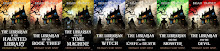
Shameless self-promotion…. Book 11 in the Strangely Scary Funny series comes out on Saturday, Feb 22. It’s called The Librarian and the Goddess. Here’s an amazon link: https://www.amazon.com/Librarian-Goddess-Supernatural-Suspense-Strangely-ebook/dp/B0DPJMD7K6/?_encoding=UTF8&pd_rd_w=ZZZbH&content-id=amzn1.sym.bc3ba8d1-5076-4ab7-9ba8-a5c6211e002d&pf_rd_p=bc3ba8d1-5076-4ab7-9ba8-a5c6211e002d&pf_rd_r=133-3852978-2801016&pd_rd_wg=nAV3L&pd_rd_r=1db1fcba-e0c0-4521-933a-267f38e8d436&ref_=aufs_ap_sc_dsk


Also, special deal: I have a new box-set of the first four novels in the series out. To promote I’m making it 0.99 cents for three days starting Feb. 28. https://www.amazon.com/Librarian-Supernatural-Horror-Comedy-Strangely-ebook/dp/B0DVRT6LKK?ref_=ast_author_dp_rw&dib=eyJ2IjoiMSJ9.7EAQLCrPFCK_H6Mx9VeE7zR9_xFUH68u9GBiWF6aUHavuLiQxT7pUauTA3nywsCNkPr54lOtzpP1nvCnBAxYVNKKi1LDfyMrEaMLFy-0Rgin5zn391SLPOStepk2uavIv_y4DxGapHSsxBwQKwODnWHrZpaU_UROzgHX4Ttalnw9_dfTYCbCC7uFivwKdZ7BfF1lqlVvWXPGbZKdBH25V_m0VgOqbfwNtQfXQ0HW4TY.0TKKRGH9LyJMHNQ7doQzwHAqBQ6SMTutZAlQFG5E3jA&dib_tag=AUTHOR


The box-set is on audible, too, but, alas, not for 0.99.

Monday, February 3, 2025

Write Faster and Better Doing This One Thing

 Writing in the Zone

One of THE most important things that will make your writing successful is learning to focus on writing in such a way that you are WRITING IN THE ZONE. When you are writing in the zone you aren't thinking about writing you're just writing. When you're doing this, you're making all the right moves intuitively. You're focused. You're getting down a lot of words because you're in the zone, in the flow, and they are the right words. They're building your story, they're developing your characters, your setting, your voice, your voices. DO this one thing and your writing will improve exponentially. 
FOCUS. 
When you write only write. No phone. No looking things up. No talking. No. No. No. Only one yes--write.  You do what you have to do to get in the state. (I get up at about the same time in the early morning, get my OJ and a cup of coffee, and sit down in the same place and take a few deep breaths and I'm off and running). Get in the state and write. Do not let anything interrupt you. Go with the flow. You can't be stopped.  

You'll be surprised at how much more you will get done and how much better you'll write with a consistent focus in your writing sessions. Good luck. 
Brian