Thursday, December 7, 2023

How do you write a lot? Here’s the secret: you write a lot. I know. Insightful. If you spend more time writing, more words find their way to the page. But here’s the tricky part. You probably think you spend more time writing than you do because you find distractions. I know. I do it too. But if you say you write two hours every day but what you really do is write for thirty minutes and then do some research, have a snack, surf some sites because you need to know everything about Easter Island after seeing some pictures on another site, for thirty minutes and then write a little more and have some ideas that drive you back to the internet to search for... well... you’re not sure. Then the phone rings. Then you check your email. 

You tell yourself you wrote over two hours and only got 1000 words done, but really you wrote about 45 minutes. A thousand words in 45 minutes is pretty good. 1000 words for two hours isn’t horrible, but it’s not great. Honestly, if I write for two hours, really write, my word count always makes a significant jump sometime in the second hour when I get the FLOW. When you get the FLOW, you know it. You are lost in the scene. You are living it. Words are jumping from your fingers onto the page so fast your fingers don’t even touch the keyboard. 

So here’s my advice. Write down how much you write WHEN YOU WRITE. If for any reason, good or bad, you STOP, you don’t count that time. Just record the actual time you’re putting words on paper. If nothing else, you’ll realize you probably write faster than you think. Maybe, though, it will help you really focus. An hour of real writing is worth several hours of writing a little here and there. And I’ll say, for me, sprints don’t work. They do get you to focus on writing (that part is good) so if that’s what you need to get there, do what you need to do. But the problem is that it’s hard to get to into the FLOW in fifteen minutes. Then you break it to take a break. So when you come back, you’re starting over. It works too much against reaching the state of FLOW 

Write when you write. Try to work your way into the flow. That’s how you get a lot of words on a page.

Or so I think today.

Brian


Monday, October 30, 2023

Do This If You Struggle When You’re a Discovery Writer (Panser)

 Do This If You Struggle When You’re a Discovery Writer (Panser) 


It’s scary writing a first draft. You don’t know where you’re going. How can you keep going? What happens if you can’t come up with anything? What happens if you wonder so far off from where you should go you become lost, too lost to ever recover? What happens if you write yourself into a corner? 


Here’s what you do. I’ve read many authors who do various versions of this. You can’t outline the whole novel. You just don’t work that way. But can you outline a scene? Think only of scenes; often scenes are whole chapters, but sometimes they might just be part of a chapter. Doesn’t matter.


I can’t outline, but I can outline a scene that builds on a previous scene. What I try to do in the outline is to number the main points of a scene, whether this has to do with action or conversation or reflection. Whatever the main points are. Then I write that scene. I can write it because I’ve already seen it in my mind through the outline. It’s made all the difference. How does the scene begin? How does it end? What are a few points in-between? This will allow for spontaneity and inspiration while at the same time helping you plan in a way that will make you more confident.

This outlining, scene by scene, gives you a roadmap, allowing you to stay on track and not get lost or stalled. And you can always go back and add more detailed notes or expand the outline later when the story is further along and you realize you need more to your paragraph-outline.

So, if you're a panser who wants to bring more structure and planning to your literary efforts, try outlining a scene. You'll still maintain the freedom to discover the story as you write, while having a sense of what’s just ahead. 

Friday, October 6, 2023

Plot and Language. Do They Come From Different Parts of the Brain?

 Fiction writing is complex. There’s a lot that goes into it. Here’s a point to consider: your ability to plot and tell a story come from a different place than language usage—style, voice, insight, interior life of a character.

 This was a huge revelation for me. THEY COME FROM DIFFERENT PLACES IN YOUR MIND and you can’t do both at the same time. At least not as well as you can when you separate the actions.

In practical terms, I think this means that you should try to separate them when you go through whatever your writing process is. Work on story and use that part of your brain. Write out some sentences telling yourself what you want to happen in the scene, what your goals are, and how it moves the big story forward. 

If you’re a discovery writer like me, a panser, you’re not going to be able to outline the whole story, so the way that you do this is by focusing on a single scene or chapter. Think just about the story, the bones of it, the plot of the scene. 

Then, when you’re writing the chapter, focus on language. Having already plotted out the scene, you can try to make the language express the inner conflict of the character. Your style. Your personality. Write sentences that clearly show what you’re trying to make the reader think or feel or that describe the setting or whatever you’re trying to describe. 

Separating the creation of your plot points from your use of language and all the things that go into writing your sentences will, I think, help you be better at both.

Wednesday, August 30, 2023

DON'T PANIC: Discovery Writing Means Discovering Your Story As You Write

 As a discovery writer, the most important thing is being open to discovering your story as you write. The first draft is just the beginning - you may find you need to change your story extensively in subsequent drafts before it fully takes shape. Do not panic. This is normal for a discovery writer. Just relax. Do the writer meditation. Stare out the window for fifteen minutes and daydream. Take a nap on the sofa. Have a drink if necessary—whatever you need to relax. You will go the wrong way many times in your first draft.


Trust that the act of writing itself will help you find the heart of your story. Don't feel discouraged if you need to rework plot points, add or cut characters, or even take the story in a new direction in later drafts. Every word you put down brings you one step closer to knowing the story you want to tell.


The key is not to get too attached to any one version. Be flexible and willing to make major changes if needed. Adhere to the philosophy that you can't fully know what you mean until you see what you've written. Let the story emerge organically through revision after revision. Eventually it will come into focus.


So keep an open mind as you write that first draft. Don't worry about getting it perfect. Just get the basics down. There will be time later to shape it into the story you envision in your revision. Trust the process of discovery through writing. Your story is in there waiting to be found.

Thursday, July 27, 2023

What Works For Me: building a novel

I’ve been looking at the Hero’s Journey and Three Act and Four Act and Five Act structures and Save the Cat and Save the Dog and Save the Writer and the many potential ways to structure your writing. So many ways. Choice overload. Like walking down the cereal aisle in the grocery store. And because writers approach writing in different ways, what works for one may not work for another. But what if none of them actually works for you? What if you struggle every time you try to plug one in? You blame yourself. Why can’t you get the hang of it?

Maybe you’re trying too hard to make it work and it’s making you overthink things. Writing is an art and a craft. If you can’t let your writing brain get into a flow, it’s hard to really express what your writers feel in certain situations. Maybe you’re trying to stick too closely to the form.

Here’s what I do.

I follow three-act structure in a general way. One of the fathers of philosophy, the ancient bearded Greek, b. 384 BC, Aristotle, came up with it. Works pretty well for most novels. But I ONLY follow it in a general way. I don’t worry about any of the specific rules more modern writing books put on it.

What really directs my writing, what gives form to my story, are my plots and subplots. A book might have one main plot, but my books usually have several subplots that are related to the main plot in some way. I use these to structure my writing.

If I can figure out what these are in my rough draft, that gives me a general outline of what the novel is and how it will be structured. So if I’m writing a mystery, for example, and I know I want to add a romantic subplot and maybe a family subplot then when I’m writing my story I’m looking for ways to develop each plot, focusing of course on the main plot. In revision, I’m making the development, the steps of each plot, clearly foreshadow the next step. In a romantic subplot I’m showing the evolution of the relationship, ideally related to the solving of the mystery if my main plot is mystery. If I add a family plot, like a relationship between siblings or parents etc. then that is developed too. The progress of these stories propels the plot and also gives me the organization of my entire novel.

As I’ve mentioned in the past, foreshadowing is essential. However, I don’t have to come up with it all at once. Once I figure out what’s happening at the end of one plot, let’s say our romantic plot, then I go back and with the advantage of twenty-twenty hindsight, I construct my foreshadowing.

And that’s my advice for plot and structure. It works for me. It may or may not work for you. What I like about it though is that it gives you clear content to work with when you can identify the type of plots that are in your story.

Happy writing.

Brian 

Tuesday, June 27, 2023

YOUR CHARACTER HAS TO CARE OR YOUR READER WON'T

 Your Character Has To Care or the reader Won’t

When you’re creating characters, particularly main characters, they have to care about something. Even if they’re a nihilist they must care about not caring. They must care so much about not caring that the reader is convinced of their dedication to the meaninglessness of life and will want to know why they are the way they are.

I remember Madalyn Murry O’Hare who was an atheist who lived here in Austin and disbelieved so completely in God that she formed a church of atheism. She was fanatical about her disbelief. Now there’s a character I want to read about.

If your character cares about things you’ll find yourself, as a writer, learning interesting things about the character that make him or her come alive. Usually, you’ll discover the two most important things about a character: what do they want and what do they need. There are other important things but these two are at the top of the list.

I recently watched a movie where the main character cared about nothing. This was supposed to be based on a troubled past and a pessimistic outlook on existence, neither of which seemed real because the character didn’t care about his past or his pessimism. The writer/director added some meaningless violence and a bit of meaningless sex to spice things up but, honestly, it was so boring and so pretentious and tedious that I quit on it about half way through. 

I pride myself on my ability to watch some very trashy shows/movies so it was a disappointment that even I have my limits.

I get excited about a novel, show, movie that has characters who care about things. They engage me emotionally and intellectually and I start rooting for them or against them. Once that happens a story has me hooked. I’m going to watch or read even if the plot isn’t all that interesting or unique. Make your characters care. Your readers will, too.

Thanks for reading.

More personally: 

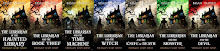
I have a novel coming out on June 29. It’s absurdist comedy at its most fantastical. Check it out if you like that kind of read. Here’s the blurb.

A fun, fast, fantastical read: After an altercation with a clown, I get lost in the woods and find a strange town. When the librarian of the town dies in front of me, I try on his ring. It fits. I’m declared the new librarian by the mayor and townspeople. I get to live in a houseful of books. But I soon learn the job involves more than just tomes and information. In fact, my first assignment is to discover who murdered my predecessor.

Meanwhile, I learn that the town is a whole lot stranger than I’d first thought and I’d thought it was pretty strange from the first. The library has a ghoul and a ghost, which seems excessive. Not everyone in the town of Eden is alive or even human. A headless seductress (she carries her head around with her) propositions me, but may also be trying to kill me.

Honestly, I have some secrets of my own. After aging out of foster care, I hit the road. At first, I just drift; then I begin to get messages in dreams that direct me to places where people need the kind of help I can give them. I learn many things. One of the things I learn is I am the One. The only problem is that I am not that One. I’m the other One. The One who will bring destruction.

https://www.amazon.com/dp/B0C6Z3PXC9/ref=sr_1_1?crid=20FB7JOU1MNM0&keywords=Brian+Yansky+The+Librarian+of+the+Haunted+Library&qid=1685785907&sprefix=brian+yansky+the+librarian+of+the+haunted+library%2Caps%2C88&sr=8-1


Monday, May 22, 2023

Discovery Writers--how to write in later drafts

 I’ve written on how to approach early drafts if you’re a discovery (pantser) writer. Be free. Take chances. Do lots of prewriting as you’re writing. Understand that because you don’t outline, you will almost certainly need several drafts. All right--so let’s say you’ve written three drafts. Remember, the first draft will be 10K-15K because you're finding your way. The second draft will probably be around 40K because you’re still finding your way and building on top of the foundation you’ve put down.

In draft 3, which might be your final draft, or/and draft 4—you’ll be trying to give your writing structure and development and theme and all the things that you need. You’ll be adding a words. How many depends on you.

How?

When you get to a draft where you have discovered and given some detail to big moments in your novel, then you need to work in foreshadowing. Now, when you’re a reader, you think of foreshadowing as something that gives the reader a sense or clues as to what will happen. As a discovery writer, I’m suggesting you work backward from the important moments of your story and build the foreshadowing to them. Most of your story can be worked out this way. 

Let’s say you have a few plots working in your novel—a mystery plot and relationship plot and a few others. One is the main plot and you have two or three subplots. Once you figure out where they end, you simply work back in a logical way to where they begin (of course it’s not simple or easy, but this will give you a kind of reverse map to follow). So if you have a relationship plot that ends with the girl getting two boys, then you have to figure out how this happened. You have to work with intention to build an exciting, interesting, logical sequence that will lead the reader to whatever ending you’ve worked out. That’s one strand of your story. Then you move on to the next. And next. And next.