Friday, September 3, 2021

 As a writer and as a person I feel like I am constantly taking this sign down and putting it back up.


Maybe it's not such a bad thing though. You got to have hope.

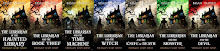
Here is my newest hope, the third novel of the Poe Detective Series, Romeo Moon.


It's a fantasy, second-world, historical (set around 1915 except, you know, second world, so the bad guy is an evil magician), western, with attention to language and humor. In other words, a mutt. I write mutts. 

I do think that readers are more receptive to genre bending and blending than they once were. Why is that?  More reviewers from more diverse spaces? Maybe because the big five or four or three or whatever it is this week don't have the strangle hold they once did on the market? Whatever the reason, I'm glad for it.

Thanks for reading. Brian

Wednesday, September 1, 2021


Here is today's brief lesson in writing fiction. You have to know your character. Do your best, your very best, to not force your character to do and say things that they would not do or say just because you think your plot needs them to. Do not give into the common problem of manipulating your characters to further your plot. BE TRUE TO YOUR CHARACTERS, Writers. Get into the mind of your spiders and your flies. That's where the magic is. Forcing your characters into false, illogical, manipulated actions and thoughts and conversations and so on will wake your reader from their fictional dream and they will be pissed and put down your book and maybe throw your book across the room and break a glass (oops, autobiography sneaking in). Let the spider be the spider and the fly the fly.

 Thanks for reading.

Saturday, July 31, 2021

 I'm sitting in front of my computer, ready to write and I'm writing a story which I really love and think is going quite well and that damn little voice in my head starts in. This is crap. You don't really want to work on this now. It's so quiet. Why doesn't the world out there make some noise? 

How about some music?

It's the silence. I feel alone when I write. The characters are not engaging me today, not making me feel that rush of life I'm making on the page because I'm not making it well. Not today. Maybe I should take off today.

NO.

I'm hungry. The dog is asleep on the floor five feet from me but I look at him (is he actually snoring? should dogs snore?) and I know he wants to go for a walk. The poor dog needs a walk that's obvious. Or maybe he needs to be taken to the vet because should dogs snore?

Anyway, the truth is I'm very hungry. Maybe I should go out for breakfast, come back, start late today.

Anyway, this manuscript I thought was so good, working so well, this morning is crap. What was I thinking?

Why write anyway? It's too hard and too lonely. 

The words on that page are not bringing a story and characters to life. They're sinking ships. They're a graveyard of wrong words and failed attempts.

I need to take a little time off and evaluate. Maybe I need to work on characterization. I could write up some sketches.

I could turn on the TV, check my email, check my phone.

You know how this goes? Time passes, I lose focus, I get angry with myself or disappointed or both, and no words or few words and not my best words get to the computer page because THE VOICE is stopping me. 

I don't have a solution. All I have is this: I know that voice. I know it's there and I know what it's trying to do. And I know it's me that is that voice, and I know I have to silence it and the noise it creates to get back to doing what I love. The only way I know how to do that is to go back to the page and write and after some struggle, eventually, the voice will be drowned out by the words on the page and I will fill the silence with my words.

That voice is me and I'm the only one who can silence it and I can only silence it by doing.

Tuesday, July 13, 2021

Kindle Vella is a new serialized story site on Amazon. It just launched today. If you write novellas or you have a collection of stories and you're having a hard time finding a place for them you might take a look at Kindle Vella. Here's a place where you can get more information. https://www.kdpcommunity.com/s/?language=en_US

Here are two stories I'm currently running there. One is a Scifi Suspense story that begins with it snowing in July in Texas. Another is an urban fantasy in which a detective (upholder of the law) is in love and in fact engaged to a villain (breaker of the law). What could go wrong? First three episodes are free. Check them out.

https://www.amazon.com/Abduction/dp/B097QNBKC5/ref=sr_1_5?dchild=1&keywords=Brian+Yansky&qid=1626207713&s=digital-text&sr=1-5

https://www.amazon.com/Detective-Villain-Girlfriend-Magician-Missing/dp/B097MC1MNN/ref=sr_1_6?dchild=1&keywords=Brian+Yansky&qid=1626208290&s=digital-text&sr=1-6

Brian

Tuesday, June 22, 2021

HOW TO WRITE A NOVEL: Use both sides of your brain


Somerset Maugham once said, according to some sources, “There are three rules for the writing of novels.Unfortunately, nobody knows what they are.” He was playing to our desire for learning the secret ingredients we're sure the best writers and bestselling writers have found. He was also following his claim with the reality of our situation: there are no three rules that we can follow even if we follow them.

Just so we're clear. I've got no rules to give you but I do have an approach that works for me and that I've developed over time and that might just work for you. It's simple. That is it has a simple version. 

Use both sides of your brain.

One side you should use for story, plot, character at the plot level (interaction of character and story),  setting, and pacing. This side tells a good story.

On the other side: this side should be used for language—making sentences that use language in a way that pulls the reader into your story. Create powerful descriptions and detail that comes from seeing scenes as a camera might see them. Creating real characters that readers believe in. Finding just the right tone for the story. The use of dialogue for both plot and character development. This side is about using language in such a way that the story emotionally engages the reader or engages him/her in other ways: makes the reader laugh, think, whatever.

The two sides overlap, of course, but here's the kicker: You need to use them separately. You need to be able to create a good story AND use language as a way of connecting with your reader and giving depth to your story but you can't do them at the same time or at least not at first. You need to think of them separately until you can use them together without thinking. Even then I'd say you need, in revision, to isolate and work on both sides since both are essential to writing fiction.


Sunday, April 18, 2021

Fiction—Outline Haters, Try This


I was a total discovery writer when I began writing and since then have moved toward more pre-drafting preparation in my process. RR Martin says that writers are gardeners (discovery writers) or architects ( outliners) in their approach to the process of writers. 


But there is a continuum and many (most) writers will be a bit of both. I think of myself as a bit of both but recently I’ve learned things go better for me if I plan more before I start writing.


Here’s a tip: One kind of outlining in called points-on-a-map. It means that you start with four or five or ten points that you work out you will have in your novel. The last point will be your ending. Then you fill in the places in-between with whatever helps you get between each point. I’ve done a very limited version of this in the past. Maybe three or four sort of vague points.


NOW I do more.


Here’s what I advise. If you just think of your outline as made up of points you’re going to work through it makes the process a bit stagnant and inconsequential.


What I do now is try to think of these points as points I really want to get to. Imagine you come up with five places you really want to see on your trip across America. Maybe there’s something you want to do at some of these places or someone you want to visit or something you want to experience in some unique way. 


In other words make the points places you really want to get to.


Make your main points exciting and important to your story and it will help you with the filling in part. Just taking this approach, seeing the outline from this angle, can help you come up with interesting points of plot as you work through your outline and manuscript.

Tuesday, April 6, 2021

Use language as the camera

 I’ve heard this before from many writers but I heard it most recently from Joyce Carol Oates and the way she expressed it—and also the fact that I think her writing is often very introspective and rich as one of those buttery voiced singers—made me start thinking about how creating a picture with words for the set design of a scene is actually really important: not just for descriptive particulars but also for choosing details of a character and of what happens in the scene. It can also help with showing more and telling less.


SO here’s what she said—paraphrase—

the writer should see the scene she is writing as if she’s off to the side and has a camera. But the camera is language. Use your camera to describe what’s happening.


For me doing this has made me think more and express more about how characters move and what the place they’re moving in looks like and feels like. It also has led to my finding what they’re thinking and feeling more accurately in that moment. Use it to ground your camera, but think of it as being made of language, and show the reader you scene.